
Loading...
For Research Use Only — Not for human consumption
Manufactured in the USABatch Produced, Batch TestedFast and Secure ShippingAffordable Pricing24/7 Support
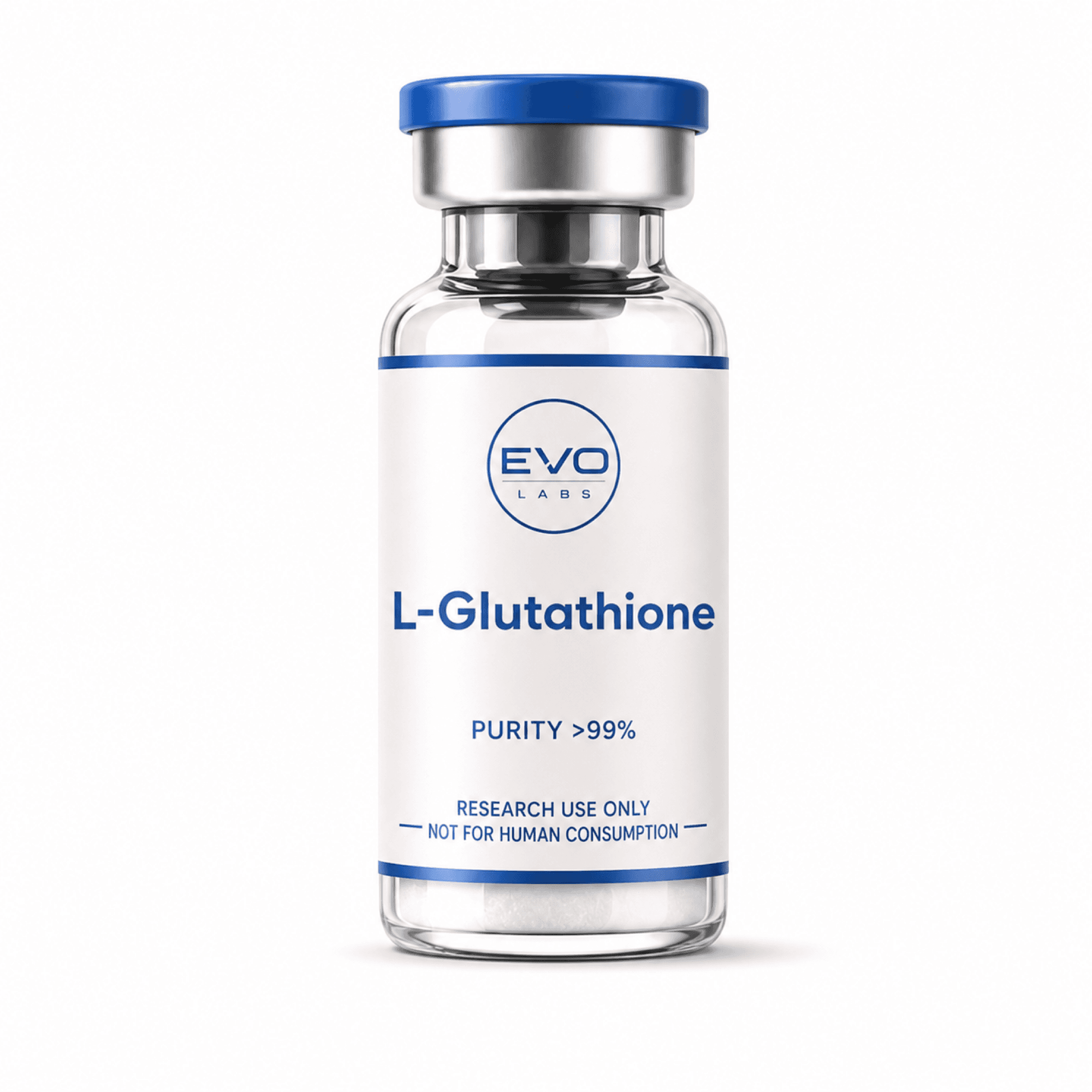
These products are for laboratory research only and not intended for medical use. They must be handled by qualified professionals in controlled laboratory environments. This compound has not been evaluated by the FDA and is not approved for human or veterinary use.
Third-party tested for purity, identity, and quantity.
L-Glutathione (GSH) is a tripeptide composed of glutamate, cysteine, and glycine, with an unusual γ-peptide bond between the glutamate and cysteine residues. It is an abundant low-molecular-weight thiol in animal cells (typically 1–10 mM intracellularly) and participates in cellular redox reactions and phase-II conjugation chemistry. Research investigations include redox biology, enzyme biochemistry, and cell-based laboratory assays.
Reduced glutathione (GSH) has a free cysteine thiol (–SH) and is the redox-active form that neutralizes oxidants. When GSH donates electrons, two molecules join via a disulfide bond to form oxidized glutathione (GSSG). The intracellular GSH:GSSG ratio is typically >100:1 in healthy cells and drops under oxidative stress, making it a standard biomarker in redox research. Glutathione reductase regenerates GSH from GSSG using NADPH.
N-acetylcysteine (NAC) is a precursor that supplies cysteine — the rate-limiting amino acid for GSH biosynthesis — but is not itself glutathione. Research has used NAC to elevate intracellular GSH levels indirectly, while reduced glutathione (GSH) provides the intact tripeptide directly. Both are common reagents in oxidative-stress research with distinct pharmacokinetic profiles.
Quality controlled from start to finish. No outsourcing.
L-Glutathione (GSH) is a tripeptide of glutamate, cysteine, and glycine found intracellularly. Supplied as a research reagent for in vitro laboratory assays only; not for human or animal use.
γ-L-Glu-L-Cys-Gly